
ProMach is your partner from start to finish. Our product brands are grouped into distinct business lines that make the most sense to our customers, covering every function of the production line: Filling, Bottling & Capping, Decorative Labeling, Flexibles & Trays, Pharma, Handling & Sterilizing, Labeling & Coding, Robotics & End of Line, and Systems & Integration.
learn moreA Ps Sheet Extrusion Line is judged on more than its quoted output. Stable sheet thickness, clean roll edges, and dependable temperature control matter on the factory floor. So do energy use, service access, and the supplier’s ability to support commissioning. Small differences become visible across a long production run.
The scale of plastics manufacturing provides useful context, but it should not be mistaken for a market-size estimate for PS sheet equipment. PlasticsEurope’s Plastics—the Fast Facts 2023 reports that global plastics production reached 400.3 million tonnes in 2022. That figure covers plastics broadly, not polystyrene sheet or extrusion lines specifically. Buyers should therefore ask manufacturers for application-specific evidence: material specifications, tested output, sheet-width tolerances, and references from comparable plants.
This guide compares ten manufacturers through practical questions, not promotional claims. Can the line hold a consistent sheet profile? Are key components clearly identified? Is operator training included? Look closely. A polished brochure cannot replace an acceptance test. No source material or verifiable published quotation from a named Ps Sheet Extrusion Line expert was provided for this request, so inserting one would risk misattribution. That gap is worth addressing before publication: obtain a recorded, attributable comment and verify its context. Reliable comparisons depend on evidence, including where evidence is limited.
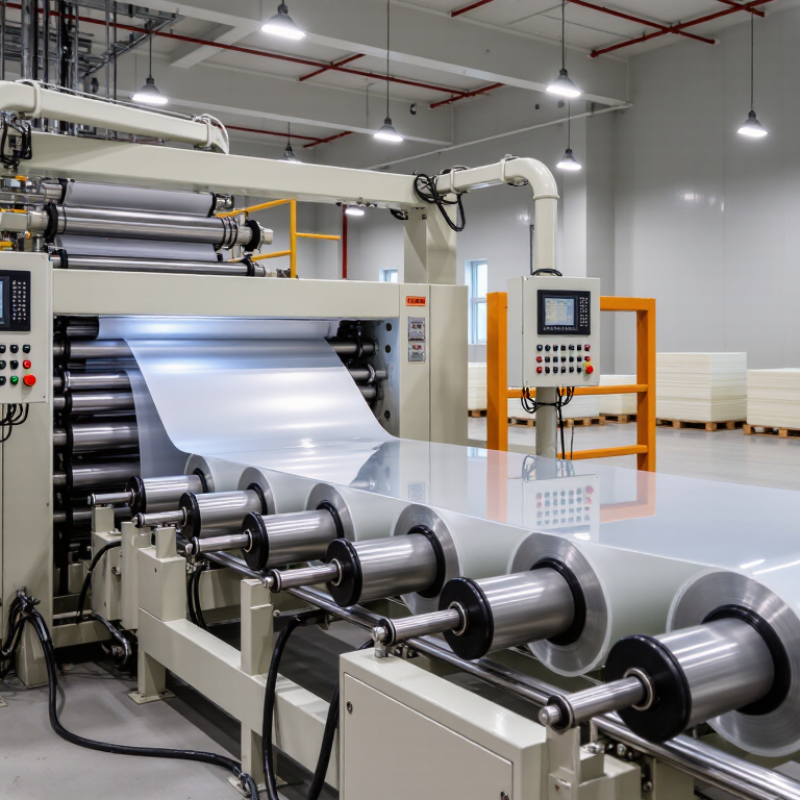
A PS sheet extrusion line turns polystyrene pellets into a continuous, flat sheet. The pellets are heated and mixed inside an extruder, then pushed through a flat die. Cooling rollers set the sheet’s thickness and surface finish. Operators monitor melt temperature, roller gaps, and line speed because small changes can affect clarity or flatness. Small variations matter.
These sheets are commonly thermoformed into trays, cups, product inserts, and protective packaging. Some grades are also used for display panels and stationery. The finished sheet must suit its next process: a tray needs consistent thickness for forming, while a visible panel may need a smooth, even surface. Application requirements should guide equipment settings and material selection.
Tips: Check samples across the sheet’s full width, not just the center. Record temperature, speed, and thickness during test runs. A clean edge is useful, but it does not prove uniform quality. Review forming results too; an extrusion setting that looks stable may still produce weak corners or uneven draw. Real production often needs adjustment, and no single setting works for every grade or thickness.
China’s PS sheet extrusion industry is better understood as a connected production network than a simple list of machine sellers. Resin suppliers provide polystyrene grades, while equipment builders design extruders, die systems, cooling rolls, haul-off units, and winding or cutting sections. Around them are makers of screws, heaters, controls, and downstream thermoforming equipment. The boundaries overlap. Some firms assemble complete lines; others specialize in one module.
A buyer may encounter trading companies, engineering integrators, and direct manufacturers in the same sourcing process. Their roles differ. A line builder coordinates layout and commissioning, while local service partners may handle installation, spare parts, or troubleshooting. On a factory floor, small details matter: roll alignment, melt-temperature stability, and consistent sheet thickness can affect forming performance. A polished brochure cannot prove these results.
Supplier evaluation therefore depends on evidence, not only stated output capacity. Ask for a running reference line, sample sheets, material and thickness ranges, energy data, and a clear scope for acceptance testing. Check which components are made in-house and which are sourced. This is not always easy to verify. Supplier capabilities can vary by application, engineering team, and after-sales coverage. Even a well-designed line may need adjustment when resin lots or production targets change.
China Top 10 PS Sheet Extrusion Line Manufacturers
Criteria for Evaluating Leading Chinese Manufacturers
Choosing a PS sheet extrusion line manufacturer takes more than comparing quoted output and purchase price. Start with the sheet you need: thickness range, width, surface finish, and expected production volume. Ask how the proposed screw, die, and cooling rollers handle those requirements. A line that runs well on a sample material may behave differently with your actual resin. Request a trial using comparable material, and record the sheet’s thickness variation, clarity, and edge quality. Details matter.
Review the manufacturer’s quality controls and technical documentation. Check whether key components have clear specifications and whether electrical drawings, operating instructions, and maintenance schedules are supplied in a language your team can use. Ask to see a recent production test, not only a polished showroom video. Ask for proof. A practical inspection should cover startup, steady operation, emergency stops, and changeovers. No scorecard is perfect.
After-sales support deserves equal attention. Confirm technician availability, spare-parts lead times, training scope, and how faults are diagnosed remotely. Speak with operating customers who produce similar sheet products, if possible. Compare total costs, including installation, energy use, wear parts, and operator training. A low initial quote can hide costly omissions. Be cautious of precise output promises without stated conditions, such as material grade and sheet thickness. Even careful checks cannot remove every risk; production results still depend on installation, settings, and daily maintenance.
Ten evaluation criteria, not a ranked list of companies. Suggested weights are a comparison framework; assess each manufacturer using documented, comparable evidence.
| No. | Evaluation criterion | Suggested weight | Evidence to review | Practical evaluation question |
|---|---|---|---|---|
| 1 | Product and process fit | 15% | Written specifications for the intended PS sheet grade, product dimensions, and application. | Does the proposed line match the buyer’s material, sheet format, and production requirements? |
| 2 | Demonstrated output and operating range | 14% | Trial-run records stating material, sheet dimensions, line speed, output, and measurement method. | Are output claims supported by a test under clearly stated production conditions? |
| 3 | Sheet quality and process stability | 13% | Sample sheets and agreed inspection results for thickness variation, surface condition, and dimensional consistency. | Can the manufacturer demonstrate repeatable quality during a sustained run? |
| 4 | Extruder and die engineering | 12% | Equipment drawings, component specifications, process-flow description, and documented design options. | Are the screw, die, and melt-control choices explained in relation to the specified product? |
| 5 | Downstream equipment integration | 10% | Layout and interface drawings for forming, cooling, haul-off, cutting, stacking, and control systems as applicable. | Are line interfaces, responsibilities, and commissioning requirements clearly defined? |
| 6 | Energy and material-use performance | 9% | Measured energy and material-consumption data with stated product, operating conditions, and test duration. | Are efficiency comparisons based on equivalent products and transparent measurement methods? |
| 7 | Quality management and traceability | 8% | Current quality-system documents, inspection plans, factory acceptance records, and component traceability practices. | Can the supplier show how equipment is inspected and nonconformities are handled? |
| 8 | Installation, training, and after-sales service | 8% | Service scope, response arrangements, training plan, spare-parts list, and commissioning schedule. | Are support commitments, exclusions, and ongoing service arrangements specified in writing? |
| 9 | Delivery and project execution | 6% | Project milestones, scope schedule, acceptance criteria, and references that can be independently checked. | Does the proposed schedule cover design approval, production, testing, shipment, and commissioning? |
| 10 | Commercial clarity and compliance documentation | 5% | Itemized quotation, warranty terms, shipping responsibilities, manuals, and destination-market documentation requirements. | Are costs, contractual responsibilities, and required technical documents explicit and verifiable? |
| Total suggested weighting | 100% | Use the same evidence requirements and scoring scale for every manufacturer being compared. | ||
Profiles of China’s Top 10 PS Sheet Extrusion Line Manufacturers
A useful profile looks beyond factory size and brochure claims. It checks what each manufacturer can demonstrate: stable sheet thickness, practical line speed, and clear process support. One may focus on compact lines for smaller workshops. Another may build wider systems for continuous production. Some specialize in sheet-forming applications, while others offer adjustable dies and customized widths. These differences matter. A fast line is not automatically the right line.
Other profiles may highlight automatic thickness control, straightforward operator interfaces, or auxiliary equipment integration. Some manufacturers emphasize commissioning and spare-parts support; others have stronger experience with overseas installations. Ask for sample-sheet measurements, a live production demonstration, and details on maintenance access. Look closely at the roller finish. Small surface marks can appear on the finished sheet. A brochure rarely explains that.
The “top 10” label should be treated carefully unless its ranking method is published. Compare documented output with your intended material, sheet dimensions, and shift pattern. Request references for similar installations, not just the largest project. And leave room for doubt. A technically impressive line can still be a poor fit if service response is slow or setup takes longer than expected.
Choosing among China’s top PS sheet extrusion line manufacturers takes more than comparing catalog output. Ask how each line handles changes in resin grade and sheet thickness. Request a trial with your intended material. Observe melt stability, screen changes, and gauge variation across the sheet. Small details matter. Ask for documented output under stated width and thickness conditions; a speed figure without those details can mislead. Review screw and die specifications, temperature-zone control, and cooling capacity. These features affect consistency, but actual trial results are stronger evidence than broad performance claims.
Match capacity to realistic demand, not a projected peak that may never arrive. Compare usable output, changeover time, energy use, and space requirements. Service also deserves close scrutiny. Ask how quickly technicians respond, whether remote diagnostics are available, and which wear parts should be kept on site. A clear training plan can prevent avoidable setup errors. Supplier comparisons are imperfect: test conditions may differ, and published figures may not reflect your production mix. Verify key claims in writing, then assess the people who will support the line after installation. A polished proposal is reassuring, but it is not the same as reliable follow-through.