


ProMach is your partner from start to finish. Our product brands are grouped into distinct business lines that make the most sense to our customers, covering every function of the production line: Filling, Bottling & Capping, Decorative Labeling, Flexibles & Trays, Pharma, Handling & Sterilizing, Labeling & Coding, Robotics & End of Line, and Systems & Integration.
learn more


How to Choose the Best Tray Packaging Machine?
Selecting the right Tray Packaging Machine can directly affect product protection, labor efficiency, and daily production stability. A reliable machine should match your tray dimensions, packaging material, product weight, and expected output. Before comparing suppliers, observe your actual line. Measure conveyor space, check electrical requirements, and record how operators load and inspect trays. Small details matter.
A machine handling fresh food may need gentle product movement, hygienic stainless-steel construction, and easy access for cleaning. A bakery line may require accurate film control to protect delicate surfaces without crushing them. Test several tray sizes if your product range changes seasonally. Confirm sealing temperature, film compatibility, changeover time, and reject handling during a practical demonstration. Ask for documented capacity, not only attractive figures from a brochure. Real performance can vary with product shape, operator experience, and maintenance routines.
Look beyond the purchase price. A well-designed Tray Packaging Machine should offer dependable controls, accessible spare parts, clear training, and responsive technical support. Request references from businesses with similar products and production volumes. Review warranty terms carefully, including service response times and replacement components. Safety guarding and emergency controls must also be suitable for your workplace and local requirements. No machine is perfect. A faster model may demand more skilled maintenance, while a cheaper option may create hidden downtime. The best choice is the one that performs consistently in your real environment, not merely during a polished showroom test. Record trial results, question uncertain claims, and leave room for future growth. That evidence supports a more confident investment.
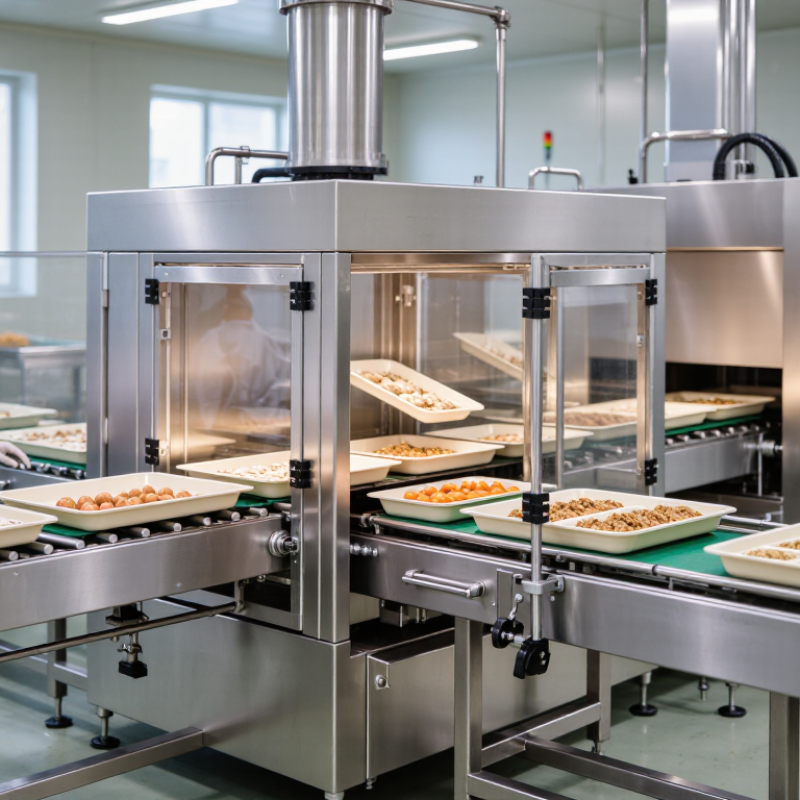
What Is a Tray Packaging Machine and How Does It Work?
A tray packaging machine places products into preformed trays, then seals them with film. Some models form trays from roll stock before filling and sealing. The process usually includes tray loading, product positioning, gas flushing, film sealing, cutting, and discharge. Sensors check tray presence and film alignment. A control system adjusts temperature, pressure, and sealing time.
PMMI’s packaging industry reports identify automation, labor shortages, and flexible production as major investment drivers. This matters when selecting equipment. A machine should match tray dimensions, product weight, sealing film, and required output. Smithers estimates the sustainable packaging market will grow from about $297.5 billion in 2023 to $423.3 billion by 2028. Therefore, material efficiency and recyclable film compatibility deserve careful attention. A fast machine is not always the best machine. Changeover time can quietly reduce real production capacity.
Tips: Measure the full line, not only the machine. Test oily, wet, or fragile products before purchase. Ask for actual samples and sealing results. Check cleaning access around conveyors and sealing plates. Operators notice small problems first. Do not ignore them. I have found that unclear specifications often create expensive adjustments later. Also, reported speed may reflect ideal conditions, not daily factory performance. Allow space for maintenance, inspection, and future tray sizes. Reliability comes from practical testing, clear data, and honest limits.
How to Choose the Best Tray Packaging Machine? - What Is a Tray Packaging Machine and How Does It Work?
| Machine Type | How It Works | Typical Output | Suitable Tray Materials | Atmosphere Options | Best For | Main Advantages | Key Considerations |
|---|---|---|---|---|---|---|---|
| Manual or Semi-Automatic Tray Sealer | An operator places a filled tray into a sealing die. The machine applies heat and pressure to bond lidding film to the tray flange, then cuts or separates the film. | Approximately 2–8 trays per minute, depending on the operator and sealing cycle. | Commonly polypropylene, polyethylene terephthalate, aluminum, paper-based, and other heat-sealable tray structures. | Usually air sealing; some semi-automatic models support gas flushing. | Small producers, food-service operations, product testing, and frequent format changes. | Low initial investment, compact footprint, and flexible operation. | Higher labor dependence and less consistent throughput than automated systems. |
| Automatic Tray Sealer | A conveyor or indexing system automatically loads trays into a sealing station. The machine positions film, seals it, trims the perimeter, and discharges the finished packs. | Approximately 10–40 trays per minute, depending on the number of sealing cavities and product layout. | Rigid plastic, fiber-based, aluminum, and multilayer trays designed for heat sealing. | Air sealing and optional gas flushing for modified-atmosphere packaging. | Medium-volume food production requiring repeatable sealing and reduced manual handling. | Consistent seal quality, higher productivity, and easier integration with upstream or downstream equipment. | Requires compatible tray dimensions, suitable film, regular cleaning, and trained operators. |
| Modified-Atmosphere Tray Sealer | The tray is placed in a chamber or sealing area where air is removed or displaced with a controlled gas mixture before the lidding film is sealed. | Approximately 8–30 trays per minute, depending on chamber size, gas cycle, and sealing configuration. | Gas-tight trays with compatible barrier films and reliable heat-sealable coatings. | Vacuum, gas flushing, or a combination of both; gas selection depends on the product and shelf-life target. | Fresh meat, poultry, seafood, prepared meals, produce, and other products sensitive to oxygen exposure. | Can help control oxygen levels and protect product quality when correctly validated. | Higher equipment cost, gas consumption, and stricter requirements for seal integrity and package leakage control. |
| Vacuum Skin Packaging Machine | Air is removed from around the product, and a heated skin film is drawn tightly over the product and sealed to a compatible tray surface. | Approximately 4–20 trays per minute, depending on product height, tray size, and cycle settings. | Rigid barrier trays with films engineered for skin-pack sealing and controlled stretch. | High-vacuum packaging; gas flushing may be available on selected configurations. | Fresh meat, fish, poultry, cheese, and products where close product presentation is important. | Close-fitting presentation, reduced product movement, and strong visual display. | Film and tray compatibility are critical; sharp bones, uneven products, or excessive liquid may affect package quality. |
| Thermoform-Fill-Seal Machine | A roll of web material is heated and formed into tray cavities, products are loaded, and a top web is sealed over the filled cavities before cutting. | Approximately 20–100 packs per minute, depending on the number of lanes, pack size, and production configuration. | Formable multilayer plastic films and selected recyclable or fiber-containing web structures approved for the application. | Vacuum, gas flushing, or vacuum-gas cycles. | High-volume operations seeking integrated tray forming, filling, sealing, and cutting. | High output, efficient material use, and reduced dependence on pre-made trays. | Higher capital cost, more complex changeovers, and greater requirements for tooling and maintenance. |
| Rotary Tray Sealer | Trays move through rotating stations for loading, gas treatment or vacuum, film sealing, cutting, and discharge. | Approximately 30–120 trays per minute in multi-lane production configurations. | Pre-made rigid trays and compatible lidding films designed for high-speed sealing. | Air sealing, vacuum, gas flushing, or combined cycles, depending on the machine design. | Large-scale production with stable product formats and continuous demand. | High throughput and efficient use of floor space when configured for multiple lanes. | Less suitable for frequent format changes; precise synchronization and scheduled maintenance are important. |
Related Posts
-
How to Choose Pouch Filling Equipment for Your Business?
-
Future of Packing Equipment: 2025 Innovations and How to Optimize Your Supply Chain
-
Exploring the Surge in Global Demand for Sachet Packaging at the 137th Canton Fair
-
Top 5 Form Fill Seal Machines Every Buyer Should Consider?
-

Top Benefits of Using Horizontal Form Fill Seal Machines in Packaging Industry
-
2026 Best Pre Made Pouch Filling Machine for Global Buyers?