


ProMach is your partner from start to finish. Our product brands are grouped into distinct business lines that make the most sense to our customers, covering every function of the production line: Filling, Bottling & Capping, Decorative Labeling, Flexibles & Trays, Pharma, Handling & Sterilizing, Labeling & Coding, Robotics & End of Line, and Systems & Integration.
learn more


10 Tips for Choosing a Form Fill And Seal Machine
Choosing the right Form Fill And Seal Machine can influence every shift, from film usage to finished-pack consistency. The decision deserves more than a glossy brochure and a fast production claim. Jorge Izquierdo, Vice President of Market Development at PMMI, offers a useful perspective: “A packaging machine must fit the entire operation, not only the package.” That principle should guide this practical introduction.
The following ten tips examine the details that are easy to overlook. They cover product characteristics, bag dimensions, filling accuracy, sealing temperature, film compatibility, changeover time, sanitation, controls, maintenance, and supplier support. Small details matter. A weak seal can become a customer complaint. A difficult film path can turn a five-minute adjustment into a long stoppage. An impressive speed rating may also hide frequent rejects.
Look closely.
A reliable evaluation should include real product trials, not only sample photographs. Ask the supplier to test your powder, granules, liquids, or irregular pieces under realistic conditions. Measure output, seal strength, waste, noise, and operator effort. Check whether operators can reach the forming collar safely and cleanly. Review spare-part availability and remote technical assistance before signing any agreement.
No single machine fits every factory. That is an uncomfortable truth. A compact machine may suit limited floor space, yet struggle with future expansion. A highly automated system may reduce labor, but require stronger technical skills. These trade-offs deserve honest review. Use the ten tips ahead as a working checklist, then challenge each recommendation against your products, people, budget, and production goals.
Understanding Form Fill and Seal Machine Functions
10 Tips for Choosing a Form Fill And Seal Machine
Understanding Form Fill and Seal Machine Functions
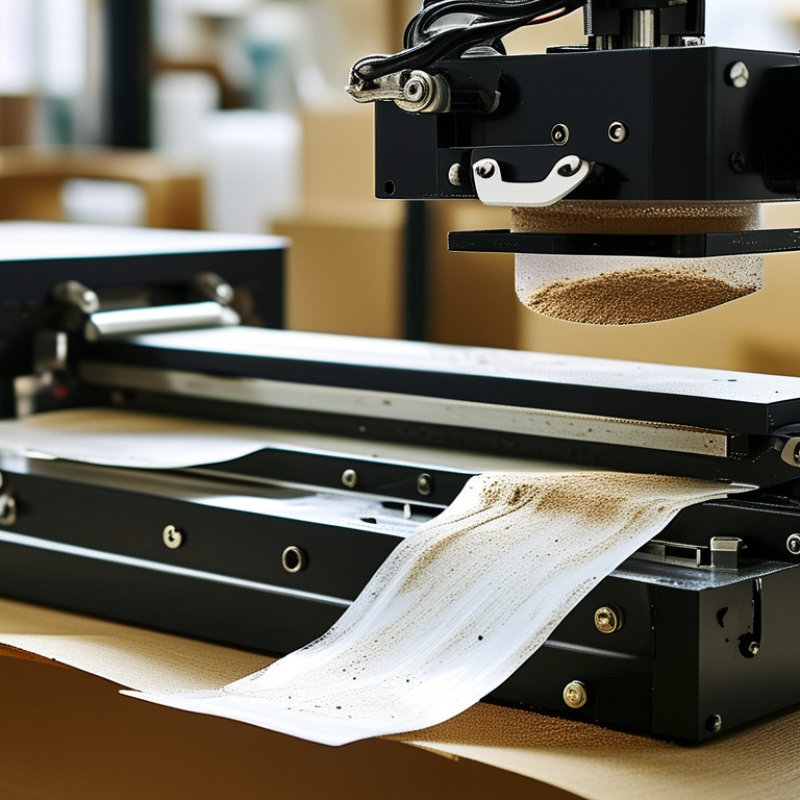
A form fill and seal machine builds a package through several linked actions. It unwinds film, forms a tube, measures the product, and seals each edge. Some systems also print codes, flush air, and detect faulty seals. Each function affects output quality. A weak sealing jaw can ruin an otherwise accurate filling process.
PMMI reported that U.S. packaging machinery shipments reached approximately $10.2 billion in 2022. Its industry reports also identify automation and labor availability as major investment factors. This data supports careful attention to controls, sensors, and changeover time. A servo-driven system may improve film tracking and dosing consistency. However, speed alone is not enough. Confirm the machine’s filling method, such as auger, volumetric, or multihead weighing.
In plant trials, observe the forming collar closely. Film wrinkles often appear there before operators notice leaking seals. Check sealing temperature, pressure, and dwell time under real production conditions. Ask for documented accuracy results, not impressive showroom claims. The machine should record alarms, batch settings, and rejected packs. These records help maintenance teams find recurring faults. A 2023 Smithers report projects continued growth in flexible packaging, driven partly by material efficiency and convenience. That trend makes film compatibility important. Still, thinner film is not automatically better. It may demand tighter tension control and more precise sealing. I would test the least forgiving material first. Perfect operation is mostly a fantasy. Reliable adjustment matters more.
10 Tips for Choosing a Form Fill And Seal Machine - Understanding Form Fill and Seal Machine Functions
| No. | Selection Dimension | Machine Function to Understand | Typical Data or Recommended Range | What to Verify Before Purchase | Priority |
|---|---|---|---|---|---|
| 1 | Product Type and Fill Method | The filling system meters and dispenses the product into the formed pouch or bag. | Auger fillers are commonly used for powders; volumetric or multi-head systems suit many free-flowing solids; pumps are generally used for liquids and pastes. | Confirm product flowability, particle size, viscosity, moisture content, bulk density, and whether the product is fragile or dusty. | High |
| 2 | Bag Style and Dimensions | The forming set shapes the film into the required pouch or bag format before filling and sealing. | Common formats include pillow bags, gusseted bags, block-bottom bags, and three-side-seal pouches. Usable bag width and length depend on the forming tube and sealing layout. | Match the machine’s supported bag width, bag length, gusset depth, film roll width, and finished package shape to the required package specifications. | High |
| 3 | Production Speed | The film transport, filling, sealing, and cutting systems operate in a synchronized cycle. | Many intermittent-motion systems operate at approximately 20–60 bags per minute, while continuous-motion systems may achieve higher output depending on product and package size. | Request tested output using the actual product, film, fill weight, bag dimensions, and seal specifications. Distinguish rated speed from sustainable production speed. | High |
| 4 | Filling Accuracy | The dosing system controls the quantity of product delivered to each package. | Accuracy varies by filler design and product characteristics. Weigh-based systems generally provide tighter control than simple volume-based systems when bulk density changes. | Review target fill weight, allowable tolerance, calibration procedure, weighing resolution, feedback control, and performance at minimum and maximum speeds. | High |
| 5 | Sealing Performance | The sealing jaws apply controlled heat, pressure, and dwell time to create a reliable package seal. | Common sealing arrangements include three-side, four-side, and center-back seals. Seal temperature must be compatible with the selected film structure. | Evaluate seal strength, seal width, temperature control, jaw pressure, dwell time, leakage resistance, and seal performance when product contaminates the seal area. | High |
| 6 | Film Compatibility | The film unwinding, registration, forming, and sealing assemblies handle the selected packaging material. | Film may be supplied as laminated, coated, polyethylene-based, polypropylene-based, paper-based, or recyclable mono-material structures, depending on the application. | Confirm allowable film thickness, roll diameter, core size, coefficient of friction, print-mark requirements, sealant layer, and compatibility with the forming and sealing system. | High |
| 7 | Registration and Cut Control | Photoelectric sensors detect printed registration marks so the machine can align graphics and cut each package accurately. | Registration control is essential for pre-printed film. Unprinted film may use programmed length control instead of print-mark detection. | Test mark contrast, registration tolerance, film tracking, cut position, splice detection, and package appearance at the intended operating speed. | Medium |
| 8 | Changeover and Adjustability | Changeover features allow operators to switch products, fill weights, bag sizes, or film formats efficiently. | Changeover time depends on the number of mechanical adjustments, tooling changes, cleaning requirements, recipe settings, and operator experience. | Ask for documented changeover time, tool-free adjustment options, stored recipes, adjustment scales, quick-release components, and access to change parts. | Medium |
| 9 | Hygiene, Cleaning, and Safety | The machine design supports product protection, safe operation, inspection, cleaning, and maintenance. | Important features may include stainless-steel product-contact parts, sloped surfaces, guarded moving parts, emergency stops, interlocked doors, and tool-accessible cleaning areas. | Verify cleanability, dust control, washdown limitations, food-contact materials where applicable, guarding, electrical protection, risk assessment, and sanitation procedures. | High |
| 10 | Utilities, Controls, and Maintenance | The control system coordinates filling, film movement, sealing, fault detection, data settings, and machine diagnostics. | Typical requirements may include electrical power, compressed air, and optional gas flushing. Utility consumption depends on machine size, speed, sealing method, and installed options. | Confirm voltage and frequency, compressed-air pressure and quality, gas requirements, control-panel language, fault history, spare parts availability, preventive maintenance intervals, and operator training. | High |
Related Posts
-
Top Vertical Form Fill Seal Machines: Features, Benefits & Buying Guide
-
The Future of Packaging Solutions: Revolutionizing Production with the Best Pouch Filler
-

Understanding the Functionality of Form Fill And Seal Machines
-

Top Benefits of Using Horizontal Form Fill Seal Machines in Packaging Industry
-
How to Master the Art of Sachet Packaging for Your Business Success
-
How to Effectively Utilize a Horizontal Form Fill Seal Machine for Your Production Needs