
ProMach is your partner from start to finish. Our product brands are grouped into distinct business lines that make the most sense to our customers, covering every function of the production line: Filling, Bottling & Capping, Decorative Labeling, Flexibles & Trays, Pharma, Handling & Sterilizing, Labeling & Coding, Robotics & End of Line, and Systems & Integration.
learn moreChoosing chain link fence mesh is not just a matter of picking a roll that looks sturdy. The right choice depends on what the fence must do, where it will stand, and how long you expect it to last. A backyard enclosure, a garden boundary, and a busy commercial perimeter can call for different mesh openings, wire thicknesses, heights, and coatings. Small details matter.
A mesh opening that is too wide may not suit small pets, while heavier wire can add strength but also increase cost and handling effort. Galvanized and vinyl-coated finishes offer different levels of protection and appearance, so consider local weather and maintenance needs. Often overlooked. Check the product specifications carefully, and compare the stated wire gauge, mesh dimensions, coating, and roll length rather than relying on a product photo. Posts, rails, gates, and the ground itself also affect how well a fence performs. A good mesh cannot compensate for poorly planned supports.
This guide shares seven practical tips for choosing chain link fence mesh, from matching the mesh to its purpose to checking quality before purchase. It also considers installation and long-term upkeep, because the cheapest option may not remain the cheapest after repairs. There is no single best specification for every property. Measure the area, note likely wear points, and ask suppliers to clarify any details that seem unclear. Some choices still involve trade-offs, and that deserves a second look before ordering.
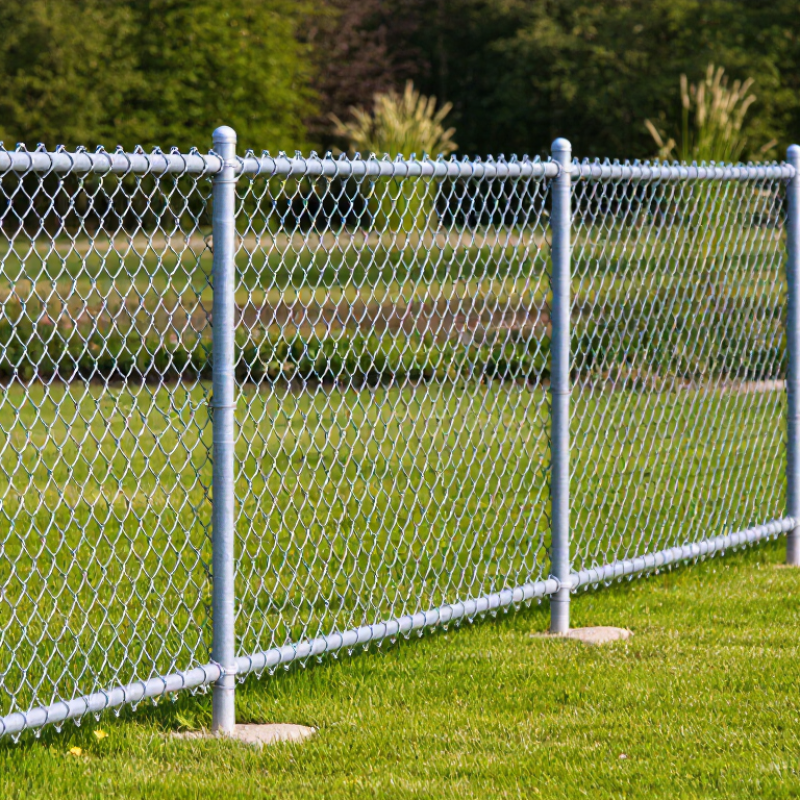
Chain-link fence mesh is woven from steel wire into a diamond pattern. Its core parts are the fabric, line wires, selvage edges, and protective coating. The opening size affects visibility and containment; a common residential opening is two inches, though smaller openings are available. Small details matter.
Wire diameter is often described by gauge, but gauge numbers can confuse buyers: a higher gauge usually means thinner wire. Compare the stated diameter, not just the gauge. ASTM A392 sets requirements for zinc-coated steel chain-link fabric, including coating classes and measurable coating mass. Check the current standard and supplier’s test documentation, especially for damp or coastal sites. A heavier coating can improve corrosion resistance, but it cannot prevent damage from poor installation or persistent standing water.
The mesh also relies on its frame. Posts support the fabric, rails steady the top edge, and tension bars and bands hold the fabric against terminal posts. ASTM F567 covers chain-link fence installation practices, including fabric attachment and tensioning. Look for compatible fittings and a clearly specified wire core. A practical check: inspect a cut wire end and several ties; rough coating, loose connections, or uneven diamonds may signal inconsistent workmanship. I have seen neat-looking mesh sag when its posts were undersized. That part is easy to overlook.
A 2-inch mesh is common, but the opening alone does not tell you how secure a fence will be. The Chain Link Fence Manufacturers Institute’s technical tables list common fabric options including 2-inch openings and 9-, 11-, and 11½-gauge wire. Lower gauge numbers mean thicker wire. A heavier wire can resist bending better, but posts, ties, rails, and installation matter too. I would not treat gauge as a security score by itself.
For a yard where visibility matters, standard mesh may be enough. Where you need more screening, privacy slats or tighter mesh can reduce sightlines. They also catch more wind. The ASCE/SEI 7 wind-load standard provides methods for assessing wind pressure; a site’s exposure and fence height affect the result. A solid-looking screen can strain weak posts. That detail is easy to miss.
Check the fabric specification, not just a sample viewed from a distance. ASTM A392 covers zinc-coated steel chain-link fabric, while ASTM F567 addresses installation practices. Ask for wire diameter, mesh opening, coating type, and compatible framework details in writing. Then compare those specifications with the actual security and privacy needs at the site. A small sample helps, though it cannot reveal every installation weakness. I’d also pause before choosing the tightest mesh: more coverage is not always the better fit.
Wire gauge, opening size, and fence height should be chosen together. Gauge numbers run backward: thicker wire has a lower gauge number. For example, common U.S. sizes include 9-gauge wire at 0.148 inch and 11-gauge wire at 0.120 inch. ASTM A392/A392M specifies requirements for zinc-coated steel chain-link fabric. Check the actual diameter, not just the gauge label. That matters.
A smaller opening can make a fence harder to climb through and may help contain small pets, but it adds weight and can cost more. For pool barriers, the U.S. Consumer Product Safety Commission’s Safety Barrier Guidelines for Home Pools recommend mesh openings no larger than 1¼ inches. That guidance is specific to pool barriers; don’t assume it suits every yard. Measure the mesh opening itself, not the distance between wire centers.
Fence height should match what needs containing and the ground beneath it. A tall panel can still leave a gap on a sloped lawn. Walk the fence line with a tape measure, checking low spots and gates before ordering. I once underestimated a grade change; the extra trimming was avoidable. Taller fencing also catches more wind, so ask an installer whether posts and framework suit the site. A tidy specification is useful, but real ground is rarely tidy.
| Tip | What to Compare | Typical Options | How to Choose |
|---|---|---|---|
| 1. Compare wire gauge | Wire thickness and rigidity | Common listings include 6, 9, 11, and 11½ gauge. A lower gauge number generally means thicker wire. | Choose heavier wire for a more rigid, durable fence; lighter wire may suit lower-demand boundaries. Compare actual wire specifications, not gauge alone. |
| 2. Check the mesh opening | Size of each diamond opening | Common choices include 2-inch openings; smaller openings, such as 1¾ inches, are also available. | Smaller openings can help contain smaller animals and make it harder to reach through. Match the opening to the use; no mesh size alone makes a fence climb-proof. |
| 3. Select the fence height | Finished height above ground | Residential fences are often around 4–6 feet; taller options are used for some commercial, sports, or security applications. | Base height on the boundary, containment, or access-control need. Check local rules, property restrictions, and any pool-fence requirements before ordering. |
| 4. Choose the corrosion protection | Coating and exposure conditions | Galvanized wire has a zinc coating; vinyl-coated mesh adds a polymer outer coating over the metal. | Consider moisture, coastal air, and appearance. Confirm that mesh, posts, fittings, and ties have compatible corrosion protection. |
| 5. Match the framework | Posts, rails, fittings, and tensioning | Framework dimensions and wall thickness vary by fence height, layout, and intended use. | A taller or more heavily loaded fence generally needs a suitably designed framework. Check that posts, rails, braces, and fittings are specified for the chosen mesh. |
| 6. Choose for the main purpose | Visibility, containment, and access control | Open mesh preserves visibility; tighter openings and heavier wire change the fence’s feel and performance. | Evaluate gauge, opening size, and height together. For specialized needs—such as sports, animal containment, or security—verify suitability with the project specifications. |
| 7. Assess the site before ordering | Slope, soil, wind exposure, and gates | Uneven ground, corner locations, gate openings, and local weather can affect layout and support requirements. | Measure the fence line, plan for changes in grade and gate locations, and confirm post-setting and installation requirements for the site. |
Tip: Match the mesh material and coating to the site, not just the purchase price. For a dry inland yard, galvanized steel may provide practical corrosion resistance. Its zinc layer helps protect exposed steel, but scratches and cut ends still deserve attention. Check whether the mesh is galvanized before or after weaving. The difference can affect how well wire intersections resist rust. Small detail, often overlooked.
Tip: In wet areas or places exposed to road spray, compare galvanized mesh with polymer-coated options. A sound coating adds a barrier against moisture and contact damage. Ask for the coating type, thickness, and care guidance in writing. Sunlight and temperature changes can age some polymers, so check the stated outdoor rating. Salt air is harsh. I would not assume one coating suits every coastal site.
Tip: Inspect samples closely before ordering. Look at cut wire ends, bends, and the points where wires cross. A coating that flakes during handling may not last well in service. For a coastal or chemical-exposure setting, consider corrosion-resistant alloys, but verify the grade and suitability with a qualified supplier. Also think about repairs: a finish that is difficult to touch up can become a maintenance headache. Measure the environment honestly; a sheltered corner and an exposed fence line may need different protection.
Before comparing chain link mesh, check the specification required for your project. Standards may cover wire strength, coating, and construction, but requirements vary by location and use. Confirm the exact standard and coating type on the product documents, rather than relying on a vague “heavy-duty” description. Check the paperwork.
Measure the mesh opening, wire diameter, and fence height against your plans. Suppliers may describe opening size differently, so confirm how it is measured. Measure the actual post spacing and gate opening at the site, too. A few millimeters can affect fit. Uneven ground, old posts, or a slightly out-of-square gate can complicate a neat drawing. Measure twice.
Compatibility matters at installation. Check that the fabric height suits the rails, tension bars, and planned tensioning method. Confirm terminal posts can handle the expected pull, especially at corners and gate ends. For sloped ground, decide whether the mesh will follow the grade or step between posts; each approach changes the required dimensions. Small gaps matter. It is tempting to choose the tightest mesh and move on, but coating, post spacing, and site conditions may matter just as much. Recheck measurements before ordering, because field dimensions are rarely as perfect as the plan.
Mesh opening is the nominal distance between adjacent wires. The chart shows exact inch-to-millimeter conversions; confirm the product specification and measurement method before ordering, since opening size alone does not determine fence compatibility.