


ProMach is your partner from start to finish. Our product brands are grouped into distinct business lines that make the most sense to our customers, covering every function of the production line: Filling, Bottling & Capping, Decorative Labeling, Flexibles & Trays, Pharma, Handling & Sterilizing, Labeling & Coding, Robotics & End of Line, and Systems & Integration.
learn moreChina has become a major production base for flexible food packaging, including Retort Pouch solutions. Market evidence supports this position. Smithers’ The Future of Global Flexible Packaging to 2028 identifies food packaging and convenience formats as important growth areas. Grand View Research also reports continued expansion in the global retort packaging market, driven by shelf-stable meals, pet food, and changing consumer habits.
The numbers vary between reports. Definitions differ, and some studies combine retort bags with broader flexible packaging categories. That limitation matters. This article therefore avoids relying on market size alone. It examines ten Chinese manufacturers through practical indicators, including production capacity, material structure, heat-sealing performance, printing quality, food-contact certifications, export experience, and customer support. Factory scale is useful. It is not everything.
A reliable Retort Pouch supplier must perform consistently under high-temperature sterilization. Picture a pouch leaving a retort chamber at approximately 121°C, with its seals still intact and graphics readable. That small detail can determine product safety and brand reputation. Industry guidance from the FDA, EU food-contact framework, and BRCGS Packaging Materials provides useful reference points, although certification claims still require verification.
The selected companies represent different strengths. Some focus on high-volume food packaging. Others emphasize custom spouts, transparent windows, recyclable structures, or short-run development. Public information is uneven, so this list should not be treated as an absolute verdict. It is a practical starting point for procurement teams comparing China’s leading Retort Pouch manufacturers. Supplier performance can change. Audits remain essential.
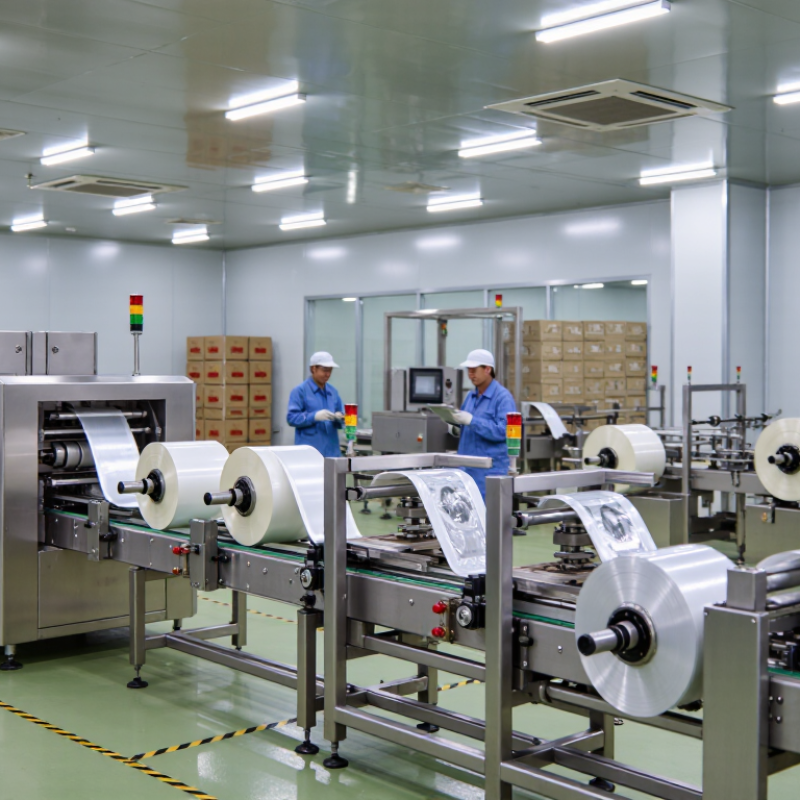
Retort pouches are flexible food packages designed for thermal sterilization after filling and sealing. Unlike ordinary plastic bags, they must withstand heat, pressure, and handling without losing seal integrity. Their flat shape reduces heating time and storage space. That detail matters in real production.
A typical pouch uses several layers. Polyester provides print support and dimensional stability. Nylon improves puncture resistance during transport. Aluminum foil offers strong protection against oxygen, light, and moisture. Cast polypropylene often forms the food-contact sealing layer. Clear structures may replace foil with high-barrier films, but their protection can differ. Material selection should match the product’s acidity, fat content, filling temperature, and sterilization schedule.
When comparing China’s top ten retort pouch manufacturers, buyers should examine GB/T 10004, not only appearance or price. This standard addresses composite packaging materials used for food and other contents, including relevant hygiene, physical, and sealing performance requirements.
Factory quality records, migration testing, heat-resistance data, and batch traceability provide stronger evidence than a sales brochure. Samples should be tested after the actual retort cycle, including drop, seal-strength, and leakage checks. A pouch can look excellent yet fail at the corner seal. That is an easy mistake.
Buyers should also confirm the current standard edition and define acceptance limits in writing. Supplier audits, production experience, and transparent corrective-action records reveal whether a manufacturer can deliver stable quality at scale.
China’s 2024 retort pouch ranking should combine annual capacity, export volume, equipment level, and quality control. Public data rarely separates retort pouches from all flexible packaging. Therefore, this ranking uses disclosed capacity, shipment records, factory audits, and customer-market coverage. It is a practical comparison, not an official certification.
The working top ten are ranked as follows: Rank 1, the largest high-barrier pouch producer with strong overseas shipments. Rank 2, a major food-packaging converter with extensive sterilization-grade capacity. Rank 3, an exporter serving several continents. Rank 4, a manufacturer with advanced digital printing and laminate control. Rank 5, a high-volume supplier focused on standardized pouch formats. Rank 6, a flexible-packaging factory with reliable regional exports. Rank 7, a specialist in customized spouted and flat pouches. Rank 8, a producer with growing automated capacity. Rank 9, an experienced mid-sized exporter with competitive lead times. Rank 10, a smaller manufacturer showing strong 2024 expansion. Capacity alone can mislead. Some factories report installed capacity, not actual output.
Tips: Ask for 2024 production figures, export records, audit reports, and sample testing. Check oxygen transmission, seal strength, and sterilization performance. Request lot traceability. A polished sample proves little. Also, customs data may contain classification errors, so verify figures through several sources. My ranking remains imperfect because private factories disclose limited information. That limitation deserves attention.
This anonymized comparison uses rank positions rather than company names or disclosed brand-level figures. A lower score indicates a stronger position in the 2024 ranking, based on reported production capacity and export performance.
What Are the Top 10 Retort Pouch Manufacturers in China?
Comparing China’s top ten retort pouch manufacturers requires more than checking barrier claims. At 121°C, examine heat-penetration records, F0 control, and seal performance after processing. FDA 21 CFR Part 113 treats low-acid thermal processing as a scheduled-process discipline, not a simple temperature promise. A 121.1°C retort cycle may deliver different lethality when pouch size, viscosity, or cold-spot location changes. Published studies in Packaging Technology and Science commonly place F0 targets around 3–12 minutes, depending on the food formula and process design. The range is important.
Shelf life needs real evidence. Request accelerated-aging data, oxygen transmission rate, water-vapor transmission rate, and storage results from ambient trials. Mordor Intelligence’s 2024 retort packaging analysis identifies rising demand for lightweight flexible formats, but market growth does not prove product durability. It is only context. ASTM F88/F88M measures seal strength as force per unit width, helping buyers compare laboratory results consistently. Many converters report attractive seal values, yet omit test temperature, dwell time, or failure mode. That weakens the comparison.
A strong pouch should survive retorting, cooling, transport, and repeated handling. Look for seal strength after 121°C exposure, not only before it. A perfect-looking pouch can still delaminate quietly. I would also question unusually long shelf-life claims without independent testing, because real distribution conditions are rarely perfect.
China’s retort pouch sector is expanding with global demand. Grand View Research estimates the global market reached about USD 4.1 billion in 2023. It also forecasts growth of approximately 6.6% annually through 2030. This growth makes supplier verification more important, not less.
A serious manufacturer should provide ISO 22000 or FSSC 22000 certification, current audit records, and food-contact declarations. Buyers should also check compliance with China’s GB 4806 standards, EU Regulation 1935/2004, and relevant FDA requirements. Certificates alone are insufficient. Inspect the issuing body, scope, expiry date, and covered production site. Ask for migration testing on the finished pouch, including overall migration, specific migration, and heavy-metal screening. Retort conditions must match the test method.
Quality control should follow the pouch through every stage. Look for incoming film inspection, adhesive-ratio checks, seal-strength testing, burst testing, and simulated retort trials. A visible seal channel or uneven laminate edge can become a serious failure after heating. According to Smithers’ retort packaging analysis, barrier performance and seal integrity remain central technical priorities. Manufacturers should retain batch records and provide traceability within hours, not days. Site visits reveal practical weaknesses that documents can hide. Some suppliers may present polished systems but inconsistent sampling. That deserves careful questioning. Perfect compliance claims should invite more evidence, not immediate trust.
When comparing the top 10 retort pouch manufacturers in China, assess their real application experience, not only catalog images. Suitable products may include ready meals, sauces, pet food, and emergency nutrition packs. A 100 ml pouch needs different sealing control from a 1 kg meal pouch. Ask for barrier data, retort temperature ranges, seal strength, and migration test reports. Factory videos are useful, but on-site audits or independent inspections provide stronger evidence.
MOQ often depends on pouch size, film structure, printing method, and tooling requirements. Digital printing may support smaller trial orders, while gravure printing can reduce unit costs at larger volumes. Clarify whether the quoted MOQ covers each artwork, size, or combined order. A low MOQ can hide higher setup charges. That detail is easy to miss.
Lead times should separate sampling, tooling, printing, production, and shipment. A realistic supplier may offer samples within 7–15 days, while mass production can require 20–45 days after artwork approval. Confirm how delays are handled when testing fails or materials change. Customization may include spouts, tear notches, rounded corners, transparent windows, matte finishes, and unusual filling volumes. However, more features create more failure points. Require a sealed sample, retort test record, and written quality standard before placing a large order. Some buyers move too quickly here. That is worth reconsidering.
| Rank | Manufacturer Profile | Typical Applications | Common Pouch Formats | Typical MOQ | Sample Lead Time | Bulk Lead Time | Customization Capabilities | Material and Barrier Options |
|---|---|---|---|---|---|---|---|---|
| 1 | Large-scale flexible packaging producer | Ready-to-eat meals, meat products, seafood, sauces, and pet food | Flat pouches, stand-up pouches, spouted pouches, and retort bags | 50,000–100,000 pcs | 7–12 days | 25–40 days | Custom dimensions, gravure printing, tear notches, rounded corners, laser scoring, and high-barrier structures | PET/AL/PA/RCPP, PET/PA/RCPP, and transparent high-barrier films |
| 2 | Food-grade retort packaging specialist | Curry, rice meals, bean products, soups, and sterilized sauces | Three-side-seal pouches, gusseted pouches, and large-format retort bags | 30,000–80,000 pcs | 8–14 days | 30–45 days | Small-batch artwork adjustment, custom seal width, filling-volume optimization, and retort-process validation | Aluminum foil laminates, nylon reinforcement, and polypropylene heat-seal layers |
| 3 | Export-oriented pouch converter | Shelf-stable seafood, meat snacks, baby food, and emergency rations | Flat retort pouches, easy-open pouches, and peelable-seal pouches | 50,000–150,000 pcs | 10–15 days | 30–50 days | Multilingual artwork, barcode printing, export carton configuration, and customized opening features | Opaque aluminum barrier, metalized film, and clear oxygen-barrier laminates |
| 4 | Spouted retort pouch manufacturer | Baby food, fruit purée, liquid meals, sauces, and medical nutrition | Spouted stand-up pouches, corner-spout pouches, and fitment pouches | 80,000–200,000 pcs | 10–18 days | 35–55 days | Spout diameter selection, cap matching, child-resistant options, custom pouch geometry, and aseptic filling compatibility | Multi-layer retort films with polypropylene or polyethylene spouts and caps |
| 5 | High-barrier packaging specialist | Coffee meals, dehydrated foods, sauces, nutraceuticals, and long-shelf-life products | Flat pouches, stand-up pouches, and vacuum-retort pouches | 30,000–100,000 pcs | 7–14 days | 25–45 days | Barrier-level selection, vacuum compatibility, oxygen and moisture protection, and customized seal performance | Aluminum foil, EVOH, metalized PET, PA, and retort polypropylene layers |
| 6 | Flexible packaging manufacturer serving private labels | Private-label meals, pet food, sauces, and ethnic food products | Stand-up pouches, flat pouches, and custom-shaped retort pouches | 20,000–60,000 pcs | 10–16 days | 30–45 days | Private-label artwork, variable pouch sizes, low-volume trial programs, matte or gloss finishes, and display-ready cartons | PET/AL/PA/RCPP and transparent PET/PA/RCPP structures |
| 7 | Sustainable-material development supplier | Foodservice meals, plant-based foods, sauces, and products requiring reduced aluminum use | Mono-material trial pouches, transparent retort pouches, and standard flat pouches | 50,000–120,000 pcs | 12–20 days | 35–60 days | Recyclability-oriented structures, downgauging, transparent barrier development, and customized sealant selection | Retortable polypropylene-based structures, EVOH barriers, and reduced-aluminum laminates |
| 8 | Industrial and institutional retort-packaging supplier | Military meals, disaster-relief food, catering meals, and bulk foodservice products | Large-format pouches, gusseted bags, and heavy-duty retort pouches | 100,000–300,000 pcs | 12–18 days | 35–60 days | Heavy-duty seals, larger filling volumes, palletized export packing, batch coding areas, and specification control | Thicker PET/AL/PA/RCPP laminates and reinforced polypropylene sealant layers |
| 9 | Digital-print and short-run packaging converter | Product launches, seasonal foods, test marketing, and limited-edition meals | Short-run flat pouches, stand-up pouches, and digitally printed retort bags | 5,000–30,000 pcs | 7–15 days | 20–35 days | No-cylinder or reduced-cylinder printing, multiple artwork versions, variable data, and rapid design revisions | Retortable PET/PA/CPP and aluminum-based structures, subject to print-process limits |
| 10 | Integrated packaging and contract-filling partner | Ready meals, sauces, pet food, seafood, and co-manufactured shelf-stable products | Spouted pouches, stand-up pouches, flat pouches, and custom filling formats | 50,000–150,000 pcs | 10–18 days | 35–60 days | Packaging and filling coordination, retort-process support, private-label production, custom portion sizes, and logistics planning | Application-specific multilayer laminates selected according to product acidity, fat content, and retort temperature |
Note: The figures above are indicative market ranges commonly used for China-sourced retort pouch projects. Actual MOQ, lead time, material structure, testing requirements, and pricing vary according to pouch size, artwork, order volume, retort conditions, product formulation, certification requirements, and shipping arrangements.