
ProMach is your partner from start to finish. Our product brands are grouped into distinct business lines that make the most sense to our customers, covering every function of the production line: Filling, Bottling & Capping, Decorative Labeling, Flexibles & Trays, Pharma, Handling & Sterilizing, Labeling & Coding, Robotics & End of Line, and Systems & Integration.
learn morePs Sheet Roll is popular in packaging because it combines practical handling with dependable forming performance. Converted into trays, inserts, and protective components, it can help keep products organized during storage and transport. Its smooth surface and consistent thickness also support clean, repeatable production. On a factory floor, that can mean fewer surprises when sheets feed into forming equipment. Small details matter.
Packaging author Walter Soroka’s work offers a useful principle, paraphrased here: “Good packaging protects the product and fits the process.” That idea helps explain the appeal of Ps Sheet Roll. Buyers can specify thickness, dimensions, and material grade to suit a particular application, while converters can plan cutting and forming around familiar roll formats. Still, popularity is not proof of suitability. A brittle edge, an unsuitable grade, or poor storage can undermine performance. Teams should test samples under real production conditions and check that the chosen material meets the product’s protection and handling needs. It is worth asking one more question: does the package reduce damage without adding unnecessary material? There is no single answer for every product. A careful trial often reveals more than a polished specification sheet.
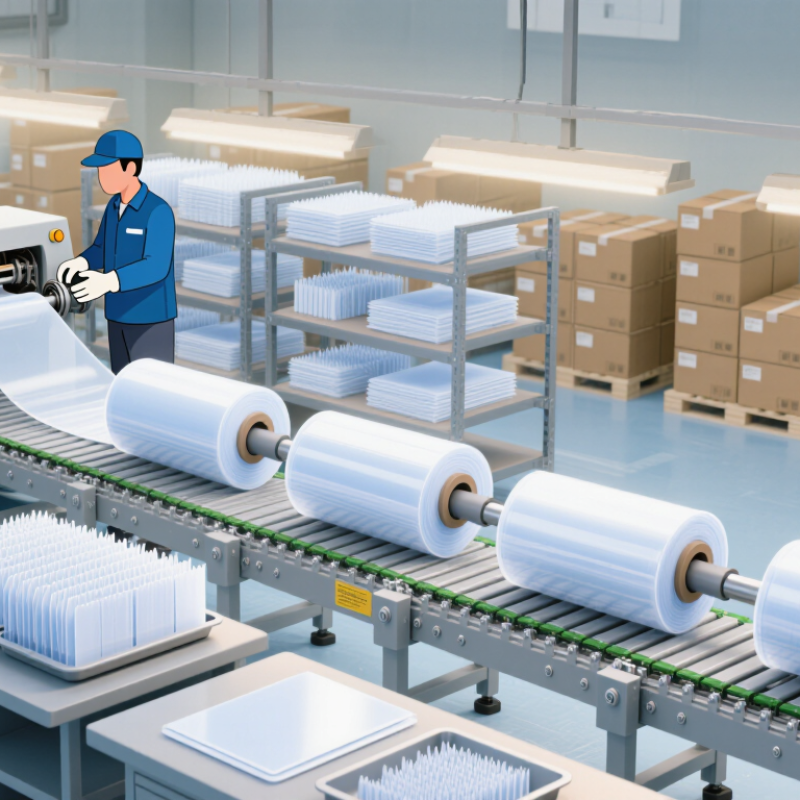
PS sheet rolls are continuous sheets of polystyrene wound around a core for storage and converting. Depending on the grade, the material may be rigid, impact-modified, or formulated for particular forming needs. Packaging converters often use it to make trays, lids, and inserts. A roll is convenient when production lines feed material directly into heating and forming equipment.
The process usually begins with polystyrene pellets. Manufacturers may blend in modifiers or colorants to meet the intended use. The pellets enter an extruder, where heat and a rotating screw melt and mix them. The molten plastic passes through a flat die, forming a wide, even sheet. Cooling rollers bring it down to temperature and help control thickness and surface finish. It is then trimmed, inspected, and wound into rolls.
Small changes matter. Temperature, line speed, and roller pressure can affect thickness, clarity, and winding quality. A sheet that looks smooth may still vary slightly across its width, so manufacturers check samples rather than relying on appearance alone. The material is not endlessly forgiving: poor control can cause uneven edges, surface marks, or rolls that unwind badly. That practical detail is easy to overlook.
Typical material density helps explain packaging choices: polystyrene (PS) is relatively lightweight compared with PET and rigid PVC. PS sheet is commonly made by melting polystyrene resin, extruding it through a flat die, cooling and calibrating the sheet, then winding it into rolls for storage and converting. Density varies by grade and additives.
Values show representative typical density ranges in g/cm³; actual values vary by formulation. Lower density does not by itself determine packaging performance.
Why Are PS Sheet Rolls Popular for Packaging?
Which Material Properties Suit PS Sheet Rolls for Packaging?
Polystyrene (PS) sheet rolls suit packaging that needs a light, rigid, formable material. General-purpose PS can offer a clear, smooth surface for product visibility. High-impact PS is usually tougher and better suited to inserts or protective trays. The grades are not interchangeable. One can crack where the other flexes.
PS sheets are easy to cut and thermoform, helping manufacturers shape trays, sleeves, and display components with consistent walls. Their smooth surface can also support printing. PlasticsEurope’s 2024 Plastics—The Fast Facts report puts packaging at about 38.6% of European plastics conversion in 2023, the region’s largest application. This market figure describes plastics overall, not PS specifically. That distinction matters.
Tips: Match the grade to the job. Check clarity, impact resistance, forming temperature, and expected handling before production. For example, a thin tray that looks neat on a shelf may still crack during transport. PS has limits, especially where repeated impact or elevated temperatures are expected. The right sheet depends on the actual use.
PS sheet rolls are converted into packaging through a controlled thermoforming process. The roll is unwound and fed into a heating area, where the polystyrene softens without becoming fully liquid. Temperature matters: uneven heating can leave some areas too stiff and others too thin. Small changes can affect the finished pack.
Once pliable, the sheet moves over a mold. Vacuum pressure, or a combination of vacuum and air pressure, draws it against the mold’s contours. This creates shapes such as trays, cups, and compartmented inserts. The formed sheet is then cooled so it holds its shape. Trimming removes excess material and defines the edges. Simple in principle.
Operators check details like wall thickness, rim shape, and surface clarity. A tray may look fine from above but still have a weak corner. That can be easy to miss. Mold design, heating settings, and sheet thickness all influence the result, so production usually involves testing and adjustment. Some waste can occur during trimming, too. Careful setup helps, but no process is perfect.
PS sheet rolls are commonly used to make thermoformed packaging. The roll feeds through heating and forming equipment, where the softened sheet takes the shape of a mold. This process creates shallow trays, compartmented containers, and fitted inserts. The finished pieces can be trimmed to match a product’s size.
Food packaging is a familiar application. Bakeries use formed trays to hold pastries, while takeout counters may use compartment trays for separate portions. Clear PS packs can display small household goods, craft items, or electronics accessories in retail settings. Protective inserts also help keep lightweight products from shifting inside cartons. A neat fit matters.
Use depends on the sheet’s thickness, clarity, and forming performance. Packaging teams often test a sample with the actual product, since sharp corners or heavy contents can stress thin areas. PS is not right for every job. Some designs feel brittle, and a package that looks sturdy on a sample may still crack during transport. Small adjustments to mold shape or sheet thickness can improve the result.
| Why Are PS Sheet Rolls Popular for Packaging? Where Are They Commonly Used? | |||
|---|---|---|---|
| Packaging Application | Common Packaging Formats | Why PS Sheet Rolls Are Used | Practical Considerations |
| Food trays and containers | Thermoformed trays, shallow containers, and compartment trays | PS sheet can be heated and formed into lightweight, rigid shapes with consistent walls. | Choose a food-contact-compliant grade where required. Heat tolerance depends on the grade and finished design. |
| Bakery and confectionery packaging | Product trays, inserts, and clear covers | Clear GPPS can display products, while impact-modified HIPS is available when greater toughness is needed. | Clear GPPS is generally more brittle than HIPS; select the grade to suit the product and handling conditions. |
| Dairy and chilled-food packaging | Thermoformed cups, tubs, and lids | PS is lightweight, can be formed efficiently, and provides a useful moisture barrier for many packaged products. | Barrier performance and suitability vary by product, thickness, grade, and any coatings or multilayer construction. |
| Meat, seafood, and produce presentation | Rigid trays and display inserts | Formed trays help support products and provide a neat, shape-retaining presentation. | Packaging requirements differ by food type and market. Some applications use other plastics or absorbent components. |
| Blister packaging | Formed cavities with a sealed backing card or film | Clear PS can make product contents visible, and sheet rolls are suitable for thermoforming shaped cavities. | Use a grade and thickness that provide adequate impact resistance and compatibility with the chosen sealing method. |
| Clamshell and retail packaging | Hinged containers and protective display packs | Thermoformed PS can create rigid packaging that holds its shape and presents products clearly. | Hinge durability and resistance to cracking depend on design, material grade, and forming conditions. |
| Electronics and component packaging | Formed trays, dividers, and protective inserts | PS sheets can be formed into organized compartments that help keep lightweight components in place. | Where static control is needed, specify an appropriate antistatic or conductive material rather than standard PS. |
| General packaging production | Cut sheets and roll-fed thermoformed packaging | Roll format supports continuous processing, while PS is available in clear and impact-modified grades. | PS is not automatically suitable for hot-fill or microwave use. Confirm temperature limits and local recycling options. |
Note: Packaging performance depends on the PS grade, sheet thickness, forming process, product, and applicable food-contact or environmental regulations.
PS sheet rolls are popular because they combine low weight with a smooth, consistent surface. Packaging converters can heat and form the sheet into trays, lids, and protective inserts. This can help keep production efficient when a design needs repeatable shapes. For a bakery tray, the material’s stiffness can support pastries without adding much package weight.
The roll format also suits continuous processing and can reduce handling between storage and forming. Clear grades make products visible, while opaque grades can hide contents or provide a clean printed surface. Buyers should check thickness, roll width, and forming temperature against their equipment. Small mismatches may cause wrinkles or uneven edges. That matters.
Popularity has limits.
Standard polystyrene can crack under impact, especially in cold conditions, so it may not suit every transport route. Heat tolerance also varies by grade and package design; hot filling needs careful testing. Recycling access is not consistent, either. A technically recyclable package may still lack a practical local collection route. Not always. In real production, operators may also find that thinner sheets save material but feel flimsy in customers’ hands. That trade-off deserves testing with the actual product, not just a sample sheet.